Nigeria Is Online. But What Kind of Internet Are We Building?
Nigeria Is Online. But What Kind of Internet Are We Building?
Nigeria has never really been a quiet place online.
From the early days of internet cafés and BlackBerry broadcasts to Twitter arguments, Instagram businesses, YouTube channels, online banking, gaming communities and the endless stream of WhatsApp messages, Nigerians have always found ways to make the internet feel like their own.
What has changed is the scale.
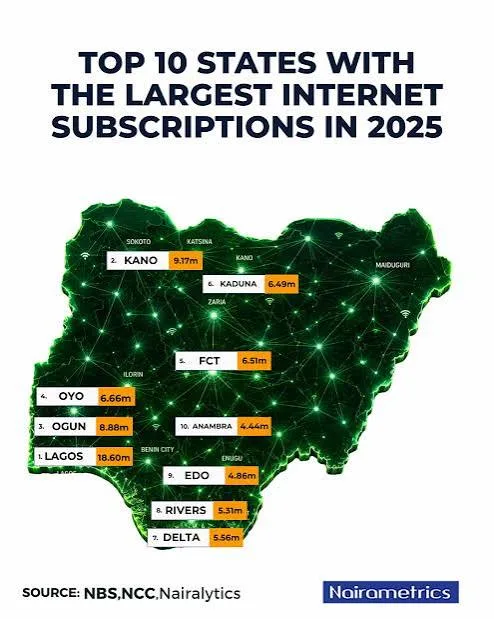
Nigeria had an estimated 109 million internet users by the end of 2025, representing about 45.5 percent of the population. There were also an estimated 47.8 million social media user identities, a figure that had grown substantially from the previous year.
Those numbers are impressive, but they do not tell the whole story.
The more interesting question is not whether Nigerians are online anymore. We clearly are.
The interesting question is what kind of internet are we building now that we are here?
The Nigerian Internet Has Its Own Personality
Spend enough time online and it becomes obvious that Nigerians do not simply use the internet. We adapt it.
A platform arrives with one intended purpose and Nigerians quickly discover five other ways to use it. Instagram becomes a storefront. WhatsApp becomes customer service, advertising, networking and sometimes an entire business operation. X becomes a newsroom, comedy club, political arena and neighbourhood meeting at the same time. TikTok becomes entertainment, education, product discovery and a surprisingly effective search engine for everyday problems.
This is part of what makes Nigerian digital culture interesting. The internet is not being experienced in isolation from everyday life. It is being mixed directly into it.
That mixture has created an online environment that feels increasingly distinct. Nigerian humour, slang, music, politics, business, fashion and social conversations all move through digital platforms at a remarkable speed. Reuters Institute's 2026 Digital News Report describes Nigeria as having a large and highly digital media audience, with social platforms and creators playing an increasingly important role in how people discover and discuss information.
The result is something bigger than simple internet adoption.
It is the development of a Nigerian digital culture.
From Consumers to Creators
For a long time, the internet was primarily a place where Nigerians went to consume things that had been created somewhere else.
We watched American movies. We listened to foreign music. We read international blogs. We downloaded software made elsewhere. We played games built for completely different environments.
Of course, Nigerians still do all of those things.
But there is another side to the story now.
Nigerians are increasingly creating things that people elsewhere are consuming.
That includes music, comedy, journalism, fashion, software, podcasts, games, educational content, financial products and entire online businesses. A person with a phone and an internet connection can potentially build an audience that would have required a television station, newspaper or physical business only a generation ago.
The rise of creators is particularly interesting because it is changing who gets to participate in public conversations. Reuters Institute's latest research found that more than a quarter of its global sample gets information from news creators each week, while countries including Nigeria show particularly strong use of creator-driven news and commentary.
That does not mean creators have replaced traditional media.
It means the gatekeepers are no longer the only people deciding what deserves attention.
And that is a significant change.
But Being Online Is Not the Same as Having Access
There is an uncomfortable part of this conversation that is easy to overlook.
Nigeria can have more than a hundred million internet users and still have millions of people who remain effectively disconnected from the opportunities the internet provides.
DataReportal estimated that around 54.5 percent of Nigeria's population was still offline at the end of 2025. Internet Society data also highlights continuing infrastructure and market challenges, including limited local content caching and poor competition among internet service providers.
So when we talk about Nigeria becoming more digital, we have to be careful about what we actually mean.
Having a smartphone is not automatically digital inclusion.
Being able to open Instagram is not the same as having reliable access to online education. Having mobile data is not the same as being able to run a business online. Having an internet connection is not particularly useful if the connection is too expensive, unreliable or slow for the things you need to do.
The next stage of Nigeria's digital development therefore cannot simply be about getting more people connected.
It has to be about making that connection useful.
We Need More Things That Feel Like They Were Made for Us
One of the most exciting opportunities ahead is local technology.
For years, a lot of Nigerian technology has been built around adapting existing ideas to the Nigerian market. That has produced some genuinely useful products, but there is still enormous room for technology that begins with Nigerian problems rather than importing solutions and modifying them afterwards.
Think about language, payments, transportation, education, healthcare, entertainment, agriculture, housing and government services.
Nigeria has problems that are specific enough to deserve specific technology.
The same applies to artificial intelligence. The global AI conversation has largely been shaped around English and other major languages, but Nigerian researchers and technology organisations are increasingly interested in systems that understand local languages, accents and contexts. Reuters Institute's Nigeria report, for example, highlights experiments with AI tools designed around local accents and languages within journalism.
That direction matters.
Technology becomes much more powerful when people do not have to constantly adjust themselves to fit the technology.
The Internet Is Also Becoming Part of Our Identity
There is another change happening underneath all of this.
The internet is becoming part of how Nigeria represents itself.
A Nigerian musician can reach listeners in another country without a foreign record label deciding whether the music is worth distributing. A designer can showcase their work globally from a bedroom. A developer can publish software that gets used by people they've never met. A filmmaker can build an audience online before anyone in traditional entertainment pays attention.
Even the way Nigeria talks about itself is increasingly shaped online.
That creates an interesting question about digital identity.
If future generations want to understand what Nigerian culture looked like in the 2020s and 2030s, they will not only look at books, newspapers and television archives. They will also find memes, YouTube videos, TikTok clips, games, podcasts, social media conversations, digital businesses and whatever else we leave behind.
Our digital culture is becoming part of our cultural record.
The Next Internet Might Be More Nigerian Than We Expect
The Nigerian internet will probably become less about simply accessing the global web and more about building our own layer on top of it.
That could mean more locally relevant software, better digital public services, Nigerian games, African social platforms, local AI systems, stronger creator businesses and digital products that understand how people here actually live.
Some of these ideas will work.
Many will fail.
That is normal.
Every major technology ecosystem is built through experimentation, and Nigeria has no shortage of people willing to experiment. What matters is creating an environment where good ideas have enough infrastructure, investment, talent and access to survive long enough to become useful.
The opportunity is enormous because the audience already exists.
The internet does not have to be something Nigeria merely participates in.
It can also be something Nigeria helps define.
Nigeria Is Already Building Its Digital Future
There is a temptation to talk about Africa's digital future as though it is something waiting several years ahead.
For Nigeria, that future is already happening.
It is happening every time someone starts an online business from their phone. It happens when a creator builds an audience without traditional media. It happens when a developer creates software for a problem they personally understand. It happens when a Nigerian game puts a familiar city into a virtual world. It happens when technology stops feeling foreign and starts reflecting the people using it.
We are already online.
The real challenge now is deciding what we want that online world to look like.
If we build it well, the Nigerian internet will not simply be a place where Nigerians consume the rest of the world's technology.
It will be a place where Nigerian ideas, businesses, culture and creativity can travel in the opposite direction too.
And that might be the most interesting part of what comes next.