Africas Next Frontier in Gaming and Digital Entertainment

Creating Our Own Worlds: The Future of African Gaming
For decades, some of the most recognisable video game worlds have been built around familiar settings: American cities, medieval European kingdoms, Japanese landscapes and fictional places inspired by popular culture. These worlds have entertained millions of people, created enormous businesses and shaped how entire generations imagine places they may never visit.
But there is a question worth asking: what happens when African creators get the opportunity to build worlds of their own, with the same level of ambition, creativity and attention to detail?
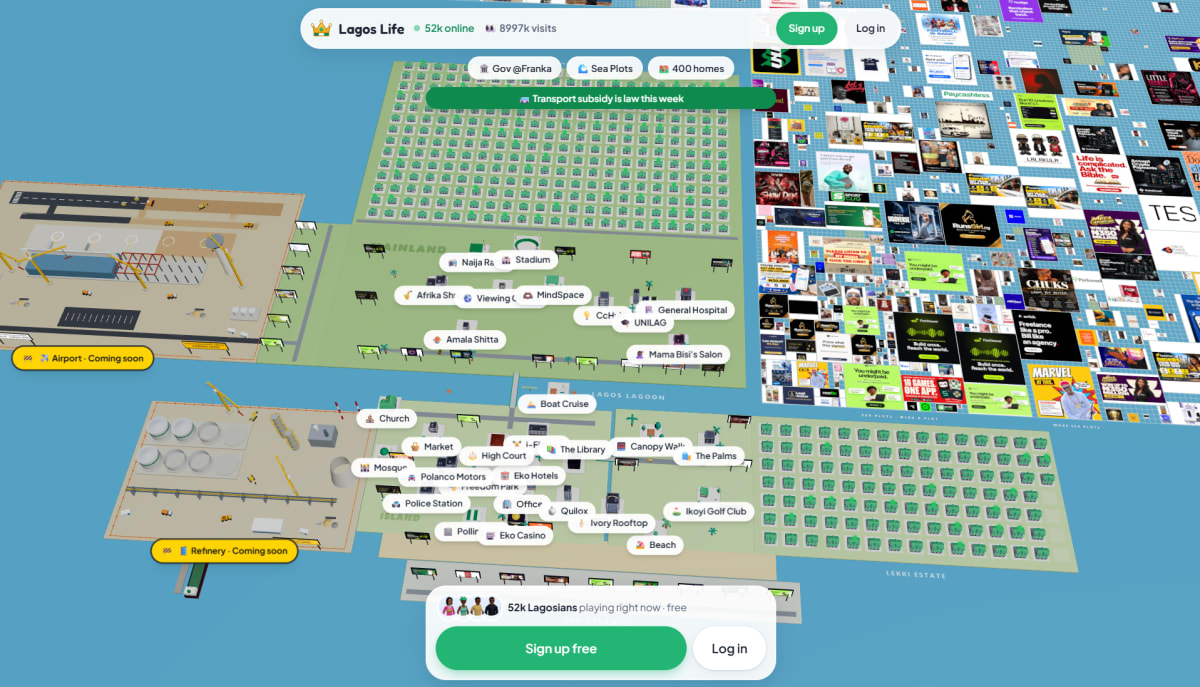
Imagine a game where navigating a crowded Lagos junction becomes part of the challenge. Where a story unfolds around a family business, a neighbourhood football rivalry or a city balancing tradition with modern life. Where characters speak naturally, the soundtrack draws from local music, and the environment feels familiar without needing to explain itself to an international audience.
This opportunity extends beyond setting. It includes the characters players create, the puzzles they solve, the communities they build and the stories they discover. From accessible creative tools such as SupaPlay's avatar creator to the more ambitious cooperative world-building behind Mazerance, there are different ways to explore what digital entertainment can become when creators have room to experiment.
The question is no longer whether African developers have interesting ideas. It is how those ideas can become compelling experiences that players genuinely want to explore.
Games Have Always Been About More Than Winning
One of the reasons video games are so powerful is that they allow people to experience a story rather than simply observe it. A film can show you a city, a book can describe it, and a song can make you feel something about it. A game can put you inside that world and allow you to influence what happens next.
Consider the difference between watching a character struggle to survive in a city and actually having to navigate that city yourself. You learn its geography, recognise its landmarks, understand its rules and gradually become familiar with its environment. The setting stops being background decoration and becomes part of the experience.
Games such as Grand Theft Auto V, Red Dead Redemption 2 and Assassin's Creed demonstrate how memorable environments, characters and world-building can become central to a game's appeal. Players often remember the places they explored and the experiences they had just as vividly as the missions they completed.
But immersion does not always require an enormous open world. Sometimes, the appeal comes from customising a character, experimenting with different appearances or working with other players to solve a problem. These smaller experiences draw from the same fundamental idea: people enjoy having a meaningful role in shaping what happens.
For African developers, that creates room to explore a wide range of ideas. The continent has its own urban environments, folklore, histories, humour, music and social dynamics. These are not limitations to work around. They are creative resources that can inspire everything from full-scale adventures to smaller, accessible entertainment experiences.
SupaPlay Shows How Personalisation Can Become Entertainment
Not every gaming experience begins with a mission, a storyline or a complicated set of mechanics. Sometimes, it begins with a character and the freedom to make that character your own.
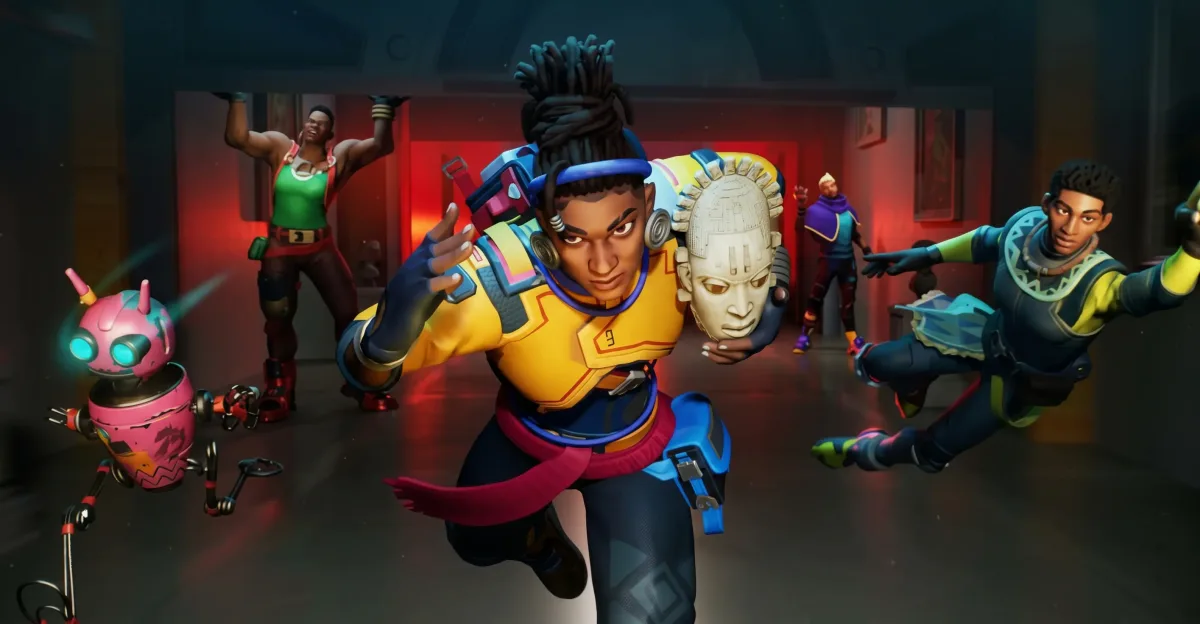
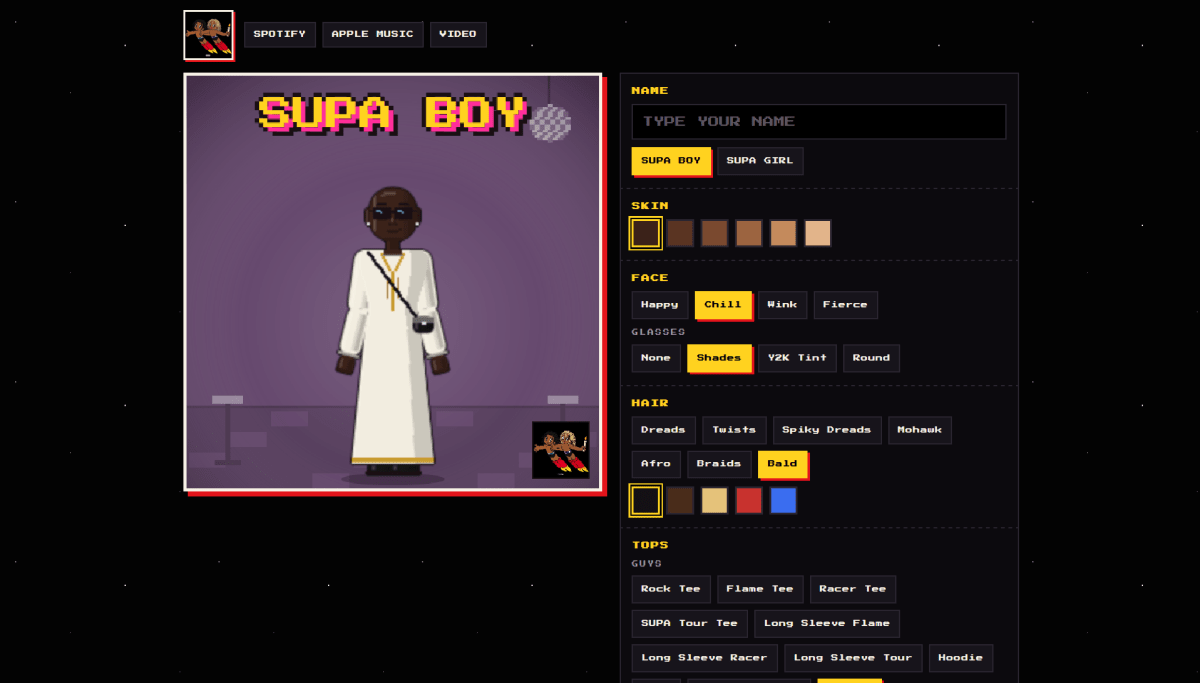
SupaPlay's avatar creator offers a browser-based experience where users can customise a character's appearance, clothing, footwear, accessories and surroundings, then generate visual content featuring their creation. The available outputs include images, GIFs and videos. You can explore the tool directly at the link above.
What makes this relevant to gaming is the role of personalisation. Instead of simply consuming a finished character designed by someone else, users participate in creating the result. They can experiment with different looks, express a particular personality or build something amusing enough to share with friends.
That experience might be relatively simple compared with a major commercial game, but it reflects an important aspect of digital entertainment: audiences do not always want to remain passive. They want to customise, experiment, create and share.
There is also an opportunity here for African creators. Character design can draw from contemporary fashion, music scenes, internet culture, local aesthetics and the many different identities found across African cities. A character creator does not need to become a cultural showcase, but thoughtful design can give users options they rarely encounter in mainstream products.
Imagine a creative tool that offers a broad selection of styles inspired by different African communities, contemporary streetwear, local visual art and original fictional worlds. Users could create characters that feel personal without being restricted to a narrow idea of what African identity should look like.
The important thing is not to treat cultural identity as decoration. It is to give creators the freedom to build distinctive experiences that people enjoy using.
Mazerance Takes a Different Route: Build a World People Must Solve Together
While SupaPlay provides an accessible example of personalisation, Mazerance explores another side of interactive entertainment: collaboration, mystery and a story that extends beyond a single game session.
Mazerance is a cooperative multiplayer strategy game designed for four to six players. According to its official website, players must communicate, plan and navigate shifting worlds while uncovering lost memories connected to a life that is not their own. A mysterious scientist sits at the centre of the story, and the motives behind the journey are not always clear.
That premise is interesting because it places cooperation and discovery at the centre of the experience. Players are not simply progressing through a sequence of objectives independently. They must work together to make sense of a world, piece together information and decide how to move forward.
The game's wider concept is equally worth examining. Mazerance has developed experiences that connect its fictional universe to websites and social platforms, allowing clues and discoveries to appear outside the traditional game environment. One initiative, called Project 9, is described as an interactive pre-launch experience built around nine interconnected puzzle websites, each associated with one of the game's mascots.
This is a different approach to storytelling. Instead of treating a website as merely a place to advertise a game, it can become part of the experience itself. Players who are curious enough to investigate may encounter additional clues, follow a trail of discoveries and connect those findings to the larger fictional world.
For developers, this opens up interesting creative possibilities. A game's world does not have to exist exclusively inside the application. Websites, visual puzzles, community challenges and other forms of digital media can contribute to the experience, provided they are designed to complement the core game rather than distract from it.
Mazerance is particularly relevant to the African gaming conversation because it is a Nigerian-founded project pursuing an original, internationally ambitious concept. Its significance is not that its premise is explicitly about African culture. Rather, it shows that African-founded studios can develop distinctive intellectual property around ideas that are not limited to familiar stereotypes or expectations about what African games should look like.
That distinction matters. Representation is not only about the setting of a story. It is also about who gets to imagine, design, finance and build the worlds that audiences experience.
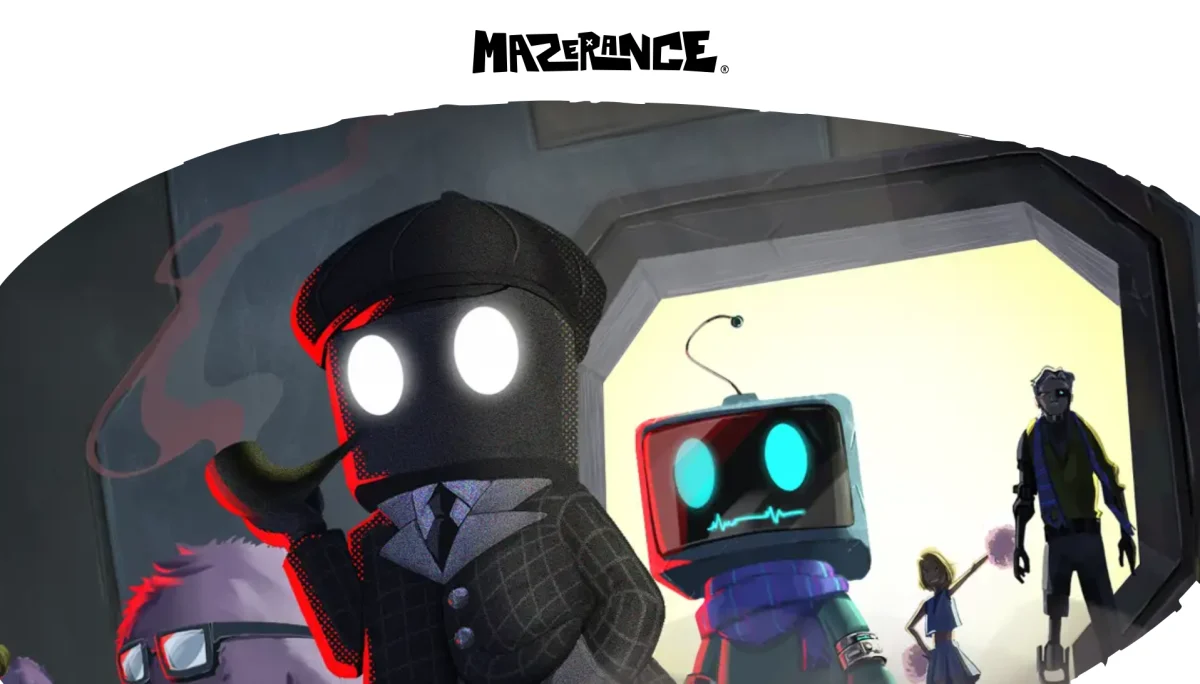
“Mazerance combines cooperative strategy, puzzles and a story built around memory and discovery.”
The Story Does Not Have to End When the Game Closes
Mazerance and SupaPlay approach interactive entertainment differently, but they point towards a shared opportunity: digital experiences can encourage people to participate beyond simply playing through a fixed sequence of content.
With SupaPlay, a user can customise a character and turn the result into a piece of visual media. With Mazerance, the official concept connects gameplay to clues and discoveries across websites and social platforms, inviting the community to help uncover more of the story. These are distinct experiences, but both demonstrate how creative participation can extend the relationship between a product and its audience.
This has implications for developers who want to build communities around their work. A game can give players a reason to return through new challenges, mysteries, creative prompts or opportunities to share their own interpretations. The experience becomes more than a product people finish and forget; it becomes something they can discuss, revisit and engage with alongside others.
Of course, adding extra layers does not automatically make a game better. The underlying experience still needs to be worthwhile. A confusing puzzle campaign will not rescue an uninteresting game, and endless customisation options cannot compensate for a frustrating interface. The additional activities must give people a genuine reason to participate.
But when those elements work together, they can create a stronger relationship between the creator and the community. Players become more than an audience waiting for the next release. They become participants in the culture surrounding it.

Africa Is Not Short of Stories. The Industry Needs More Opportunities to Tell Them.
There is a tendency to discuss African gaming as though the biggest challenge is finding interesting ideas. That gets the problem backwards. The continent has an extraordinary range of stories, languages, environments and cultural traditions. The more difficult task is turning those resources into polished games that can find audiences and sustain the businesses behind them.
Mazerance illustrates one part of that challenge. Reporting published by Nairametrics in September 2025 described the game as a project built by 5Blooded, a studio working across creative disciplines and developing its own visual, narrative and gameplay identity. The studio's stated ambitions included introducing its first playable chapter, World Zero, through a Kickstarter campaign.
Building a game of this kind requires more than an initial concept. It requires designers, developers, artists, writers and other specialists to work together over time. It also requires a sustainable plan for production, distribution, community engagement and funding.
These are substantial challenges for any independent studio, regardless of where it is based. A promising idea can remain a small personal project for years if its creator has no practical route to bringing it to market.
That is why the wider ecosystem matters. Developers need opportunities to learn, access to tools and equipment, reliable publishing relationships, funding and communities that are willing to support original work. They also need room to experiment without every project being expected to become a global hit.
Smaller products can play a valuable role here. A browser-based creative tool, a compact mobile game or an interactive storytelling experiment may be a more realistic starting point for a new team than an enormous open-world production. These projects can help developers build skills, understand their audiences and learn how to finish and distribute products.
Over time, that experience can become the foundation for more ambitious work. There is another mistake worth avoiding: assuming that every African game must focus on mythology, ancient kingdoms, wildlife or historical conflict.
Those subjects can produce wonderful experiences, but they represent only a small fraction of what the continent has to offer. Africa is contemporary, urban, technologically ambitious, politically complicated, funny, romantic and occasionally absurd. Its cities are full of stories that have nothing to do with the past.
There is room for racing games, sports simulations, management games, horror, detective stories, farming games, role-playing adventures, platformers and online multiplayer experiences. There is even room for deliberately silly games built around recognisable everyday situations.
The same creative freedom should apply to digital tools. An avatar creator can explore fashion and identity without having to tell a historical story. A cooperative puzzle game can centre on memory and mystery without needing to use cultural references as its main selling point. A game set in Lagos can be a comedy, a thriller, a social simulation or an entirely fictional adventure.
The value of local knowledge is not that every project must look or sound the same. It is that developers who understand particular environments and communities have more material to draw from when creating something original.
The goal should be an industry diverse enough to support different tastes, creative approaches and audiences. That is how a recognisable gaming culture can develop without becoming predictable.
The Business of Making Games Matters Too
Creative ambition is important, but it cannot replace the practical work required to sustain a studio. Game development can be expensive and technically demanding, especially when a project requires detailed environments, animation, online infrastructure, testing and support across multiple devices.
For independent developers, the sensible approach is often to begin with a focused experience, understand what players value and expand carefully. A smaller game with a strong central mechanic can offer a better foundation than a sprawling project that never reaches completion.
The same principle applies to distribution. Studios need to understand how players discover their games, how communities form around them and how the business will generate enough revenue to support continued work. Depending on the project, that might involve direct sales, mobile purchases, publishing agreements, crowdfunding or other business models.
Mazerance's public development story has also highlighted the importance of community-building before launch. Its official website has featured initiatives such as Pass It On and Rancers Remix, which invite people to engage with the project through sharing and creative participation. Its founder, Elvis Obi, reported in September 2026 that the project had built a community of roughly 20,000 people and generated more than eight million impressions on X, while noting that the game remained in development. These are figures reported by the founder, rather than independently audited performance metrics.
The lesson is not that every studio should copy the same marketing strategy. It is that building an audience can be part of the development process, particularly for projects whose stories and creative worlds give people something interesting to explore before release.
That work still needs to lead towards a product players can actually experience. Attention is useful, but a sustainable gaming business ultimately needs to deliver on the expectations it creates.
Let Us Build Games We Recognise, and Games We Have Never Imagined
African gaming does not need to prove its value by copying the biggest studios in the world. Nor does it need to reject global influences to establish its own identity. The most interesting work will probably emerge from the meeting of local experience, international influences and the freedom to experiment.
Some developers will explore folklore. Others will create futuristic cities, competitive sports games, relationship simulators or completely ridiculous multiplayer experiences. Some will build tools that let people create characters, while others will develop entire worlds for those characters to inhabit. Some projects will remain small and independent; others may grow into businesses with international audiences.
The important thing is that African developers should not have to choose between making games that reflect their surroundings and making games that appeal to players around the world. Those goals can complement one another when the experience is thoughtfully designed and well executed.
Projects such as Mazerance show the ambition involved in developing an original game universe and building a community around it. Tools such as SupaPlay's avatar creator demonstrate a different kind of creative participation, where users can customise characters and produce content of their own. Together, they offer useful examples of the different directions digital entertainment can take.
We cannot know which ideas will become the next major success. That is precisely why experimentation matters.
The worlds we spend hours exploring do not always have to come from somewhere else. Sometimes, they can begin with a story from home just like Lagos Life has evidently shown. Sometimes, they can start with a puzzle that a group of friends must solve together. And sometimes, they begin with something as simple as choosing a character, giving it a personality and imagining what it could become.